
I LOVE when my husband prepares Italian food. I am a full-time homemaker which means the majority of our meals are prepared by me. But, every Sunday, it has become our tradition for my husband to prepare the meal. His family is Italian and he prepares the most wonderful Italian food. This pesto and homemade pasta recipes is one of our favorites to date. It's so simple and has completely ruined store-bought pasta for me! Follow the steps below to make this yourself. It is surprisingly easy!

Note From Jill: Welcome to Paul's corner of my blog! Some of these recipes will be written by me and others by the pasta maker himself! Just a note that while the rest of my blog contains recipes that are mostly vegan and gluten-free friendly - that is not a guarantee on this end of the site. My husband is a true Italian and to him - it isn't pasta unless eggs are involved! And it isn't pesto without cheese! If you need a 100% vegan pesto recipe, I encourage you to check out my cookbook! Ok, now onto the recipe!

Homemade Pasta with Fresh Pesto
Equipment Needed
- Food processor or blender
- Pasta maker
- Mixing bowls & measuring spoons
- Pasta spoon
- Strainer
- Silicone spatula
- Medium saucepan (for boiling pasta)
- Plastic wrap
Ingredients
Fresh Pesto:
- 2 cups fresh basil
- 4 tablespoon olive oil
- ¼ cup pine nuts
- 1 clove garlic (more to taste)
- Juice from half a lemon (avoid seeds)
- ½ cup parmesan, pecorino romano, or vegan parmesan cheese
- A pinch of salt
- A splash of pasta water
Homemade Pasta:
- 1 cup all-purpose flour
- 2 large eggs (or egg substitute for vegan option)
Instructions
Step 1: Prepare the Homemade Pasta
- Clean and dry your work surface. Mound the flour and create a shallow well in the center.
- Crack the eggs into the well and gradually work the flour into the eggs using your hands.
- Knead the dough for 2-3 minutes until smooth. Form into a ball, wrap in plastic wrap, and let it rest for 25-30 minutes at room temperature.
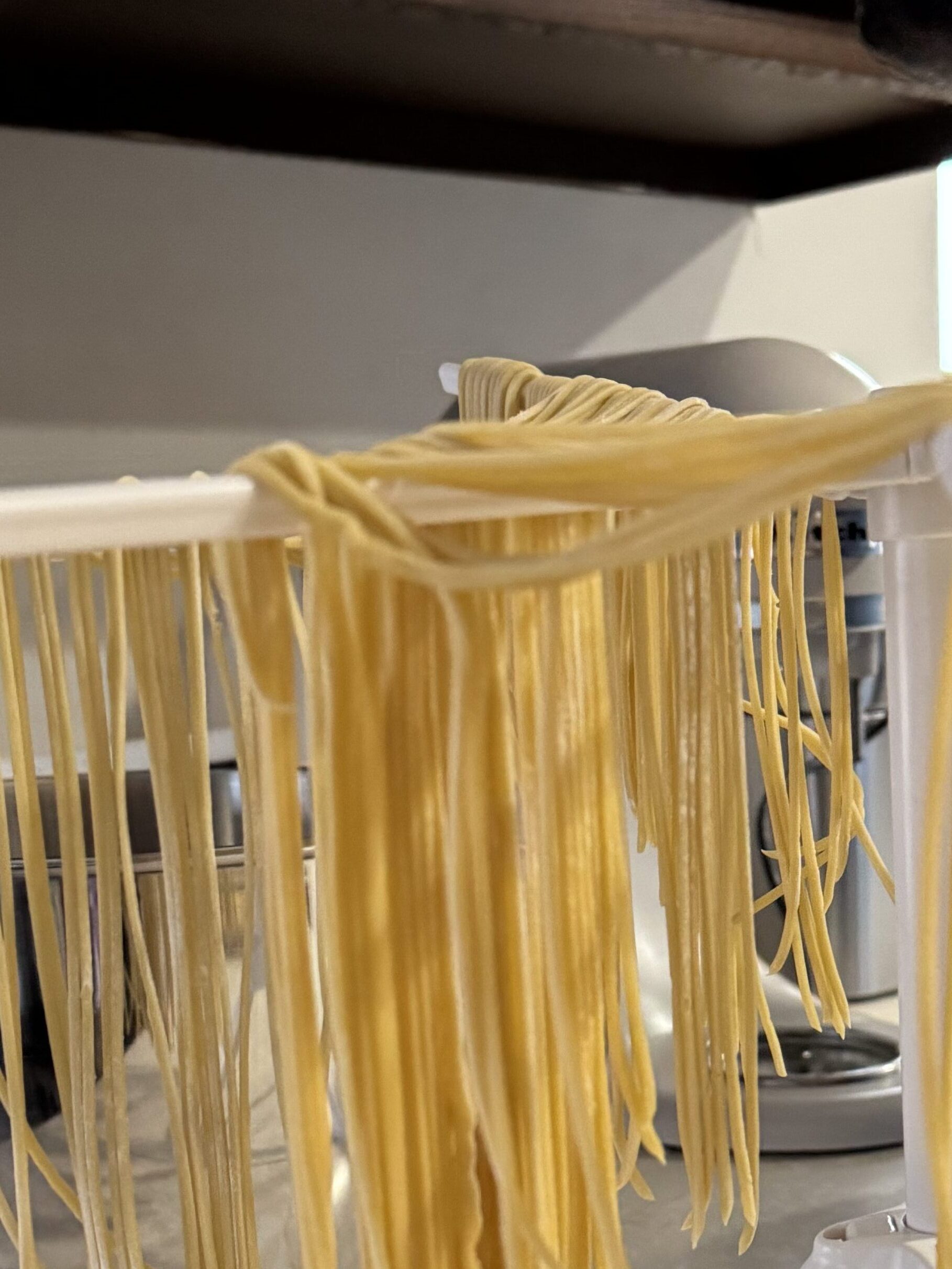
- Roll out the dough using a pasta maker and cut into your desired pasta shape (spaghetti, fettuccine, etc.). Set aside.
Step 2: Make the Fresh Pesto
- In a food processor, combine basil, pine nuts, garlic, lemon juice, olive oil, salt, and cheese.
- Process until a chunky, gritty texture forms (avoid over-blending). Set aside.
Step 3: Cook Pasta & Combine with Pesto
- Bring a medium saucepan of salted water to a boil.
- Add the fresh pasta and cook for 5-6 minutes until al dente.
- Transfer 1-2 tablespoons of pasta water into the pesto and blend until creamy.
- Drain the pasta or use a pasta spoon to lift it from the water.
- Toss the pasta with pesto and top with extra parmesan if desired.
- Serve immediately and enjoy!
Best Pasta Shapes for Pesto
Long, Thin Noodles – Spaghetti, linguine, and fettuccine are great for clinging to the creamy pesto sauce.
Short, Twisted Pasta – Fusilli and trofie work well as their ridges help hold the pesto.
Tips for the Perfect Pesto Consistency
Use Fresh Ingredients: Fresh basil, garlic, and lemon juice make all the difference in flavor.
Don’t Over-Blend: Pesto should be slightly thick, not completely smooth liquid —pulse instead of blending continuously.
Adjust with Pasta Water: Adding 1-2 tablespoon of warm pasta water makes the pesto creamier and helps it coat the pasta evenly.
Balance the Oil: Start with less olive oil and add more as needed for a smooth yet thick consistency.
Taste and Adjust: If it tastes too strong, add more extra virgin olive oil or cheese; if it’s too mild, add a pinch of salt or an extra garlic clove.
Frequently Asked Questions
Use the Right Flour: All-purpose flour works well, and for extra elasticity, you can try using 50/50 all-purpose and semolina flour.
Don’t Overwork the Dough: Knead just until smooth (about 2-3 minutes). Over-kneading can make the pasta tough.
Let the Dough Rest: Allowing the dough to rest for 25-30 minutes helps relax the gluten, making it easier to roll out.
Roll Out Thinly: Pasta expands when cooked, so aim for a thin, even sheet before cutting it into shapes.
Dust with Flour: Lightly flour your pasta strands to prevent sticking.
Yes! For a vegan pasta dough, substitute the eggs with ⅓ cup water and ½ tablespoon olive oil. Knead as usual and roll out with a pasta maker.
Fresh pasta can be stored in an airtight container in the fridge for up to 2 days. To freeze, dust it lightly with flour, shape into nests, and freeze in a sealed bag for up to 2 months.
Absolutely! Store pesto in an airtight container in the fridge for up to 5 days. To prevent browning, drizzle a thin layer of olive oil on top before sealing.
We used the one that attaches to the KitchenAid stand mixer. Here is a link for it on Amazon along with our blender and pasta drying rack.

Paul's Pesto and Homemade Pasta

Equipment
- food processor or blender
- pasta maker
- mixing bowls and measuring spoons
- pasta spoon
- Strainer
- silicone spatula
- medium saucepan for boiling pasta
- plastic wrap
Ingredients
Fresh Pesto
- 2 cups fresh basil
- 4 tablespoon olive oil
- ¼ cup pine nuts
- 1 clove of garlic add one more to taste
- juice from half a lemon be careful not to get seeds in your pesto
- ½ cup parmesan, pecorino romano, or vegan parmesan cheese
- a pinch of salt
- a splash of pasta water
Homemade Pasta
- 1 cup regular all purpose flour
- 2 large eggs
Instructions
Preparing the Homemade Pasta
- Clean and dry your prep surface. Make a mound of flour on the surface and then use your hands to create a shallow whole in the center to crack the eggs into. Crack the eggs into the center of the mound of flour. Then, carefully use your hands to work the flour into the eggs.
- Knead the dough for 2-3 minutes until it is well combined. Form it into a ball and then wrap it with plastic. Let the dough sit for 25-30 minutes at room temperature. Then, use your pasta maker to make the pasta into whichever shape you like. We went with spaghetti. Set the pasta to the side.
Preparing the Homemade Pesto
- Add your fresh basil, pine nuts, garlic, lemon, olive oil, salt, and cheese to the food processor. Process until a thick chunky pesto is formed. It should be gritty but not smooth. Set aside.
Finishing the Pasta and Pesto
- Bring a saucepan with water and salt to a boil. Once boiling, add your pasta and cook for 5-6 minutes until al dente. Use a table spoon to transfer one or two tablespoons of pasta water into the food processor and add it to the pesto.
- Blend until the pesto is creamy. Option to serve it over the pasta or toss it with a protein (chicken or tofu). To serve your pasta, either strain it or use a pasta spoon to lift the pasta from the water and transfer to a plate. Top with the pesto and a little more parmesan cheese. Enjoy immediately.

Comments
No Comments